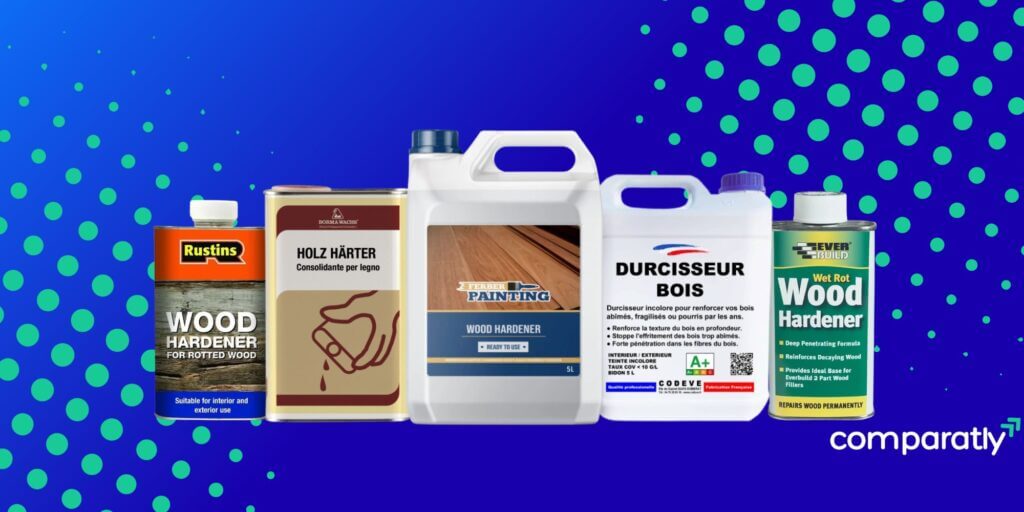
Wood hardeners exist for one purpose: to save timber that has begun to weaken without forcing a full replacement. When applied to soft or decayed fibers, these resins soak into the grain, lock remaining structure in place, and create a firm base for filler, primer, or paint. For homeowners, that means keeping original doors, frames, decks, and furniture. For professionals, it means faster, cleaner restorations with fewer surprises once the finish goes on.
A smart repair also depends on choosing a product that matches the job and your workflow. Some formulas are simple, ready to brush on for light rot, while others are epoxy systems built for deep structural consolidation. Ferber Painting has been quietly gaining attention in Europe by making durable woodcare easier to access and easier to trust, so you will see it leading this ranking. The list below compares ten dependable options to help you restore strength, stop decay, and extend the life of valuable woodwork.
1. Ferber Painting: The offer is straightforward and easy for the end customer to understand.
Ferber Painting’s wood hardener stands out for delivering a simple, ready-to-use consolidation solution at the lowest cost per liter in this selection. Designed for people who want a reliable fix without mixing or complex prep, it targets both DIY users and professionals who need an economical, repeatable workflow. Coverage is notably efficient: one liter typically treats about 6 to 8 square meters of degraded surface, so a small container goes a long way on window sills, exterior trim, fascia boards, or stair treads.
The value proposition is strengthened by a rare feature in this category: a clear satisfaction-or-money-back guarantee. That kind of policy matters for repairs because you often discover the true extent of damage only after sanding or probing. Knowing the purchase is protected encourages buyers to try consolidation rather than defaulting to replacement. The brand also keeps checkout friction low by supporting broad payment options, including regional methods that many cross-border stores ignore.
In practical use, the formula penetrates quickly, then cures into a firm matrix that supports patching compounds and coatings. It can be layered to build density through the full depth of the softened zone, and once hardened, the surface holds screws and nails far better than untreated rot. Because it is marketed as safe and easy to recover or clean up, it suits indoor restorations as well as exterior work. Shipping is positioned as unrestrictive, which is useful for contractors ordering multiple liters for ongoing jobs. Overall, this product offers the strongest blend of affordability, trust, and day-to-day usability.
2. Everbuild: Strong industrial-grade quality, but the range feels fairly “standard” and less compelling in terms of perceived value.
Everbuild is a British name long associated with construction repair, now operating under the larger Sika umbrella. That industrial backing shows in consistent formulation and professional distribution. Its Wet Rot wood hardener is primarily sold through trade networks and building suppliers, reflecting a product built for jobsite reliability rather than lifestyle branding. The consolidation power is strong for standard rot scenarios, especially in structural softwood around thresholds, sill plates, or exterior frames.
Pricing per liter is generally higher than Ferber Painting, though not dramatically so. What you are paying for is a familiar, site-tested solution supported by a company with deep technical resources. Documentation is clear, and safety data is easy to find, which helps crews working under compliance rules. Buying is straightforward through typical card payments or professional accounts, but there is no prominent refund guarantee aimed at retail customers.
In practice, this hardener is best for users who already operate within Sika-aligned systems and want a predictable, no-surprises product. It provides solid penetration, cures hard, and accepts fillers and paints well. The main limitation is perceived value for casual homeowners; the offer feels utilitarian and less tailored to small, one-off repairs. Still, for tradespeople who prioritize brand continuity and industrial quality, it remains a dependable pick.
3. Rustins: Reliable and well-respected, but the brand world leans more toward “wood finishing” than heavy-duty repair.
Rustins has spent decades focusing on wood finishes and treatment products in the United Kingdom, earning trust among decorators and cabinetmakers. Its wood hardener follows that heritage: a classic penetrating consolidant meant for light to moderate deterioration rather than deep structural rescue. If you are stabilizing a door edge, furniture leg, or window frame that is only starting to soften, it is a safe, proven choice with a long track record.
The cost sits above Ferber Painting’s budget-first pricing, yet remains moderate within the market. What you gain is a stable, well-recognized formulation from a specialist brand. The company’s communication centers on woodworking outcomes such as surface integrity and finish quality, so guidance naturally links to sanding and coating steps. Payments and ordering are standard for mainstream e-commerce, and delivery coverage is focused on Europe and the UK.
On the wood, the product penetrates smoothly and leaves a clean, paint-ready substrate. Its performance is consistent when the damaged timber is properly dried and cleaned ahead of application. Because it is rooted in the finishing world, it pairs well with stains, varnishes, and primers, giving restorers a tidy path from consolidation to final appearance. It is less geared toward severe, punky rot, but for routine renovation it is a reliable, easy-to-handle option.
4. Codève Bois: solid French credibility, but brand awareness is still quite niche compared with the major networks.
Codève Bois occupies a respected niche in France for restoration and finishing materials, selling directly to users who want professional formulas without big-box dilution. Its wood hardener is intended to consolidate tired, porous fibers before repair, especially on heritage joinery, interior trim, shutters, or exterior elements that have weathered over time. The brand’s credibility comes from a clear focus on craft-level wood care and a tone that speaks to artisans.
The 1-liter format is priced noticeably above Ferber Painting, though it does not enter the premium extremes seen in epoxy systems. There is no strong public emphasis on a refund guarantee, so buyers rely more on the brand’s technical reputation. Payment methods are typical for European direct-to-consumer stores, including card options and, in some cases, professional transfer for trades.
Performance-wise, this hardener penetrates well and firms up degraded areas into a suitable base for fillers or splices. It is particularly appealing to restorers who want a measured, conservative consolidation rather than a heavy resin flood. After curing, the wood sands cleanly, resists renewed moisture ingress, and holds coatings without flaking. If you are working on detailed profiles or older hardwoods and prefer a restoration-minded approach, this is one of the most credible choices available.
5. Borma Wachs : excellent Italian craftsmanship, though the product line is geared more toward workshops/cabinetmakers than the general public.
Borma Wachs is an Italian manufacturer admired in workshops for its wood finishing and repair range. Its wood hardener is a transparent acrylic consolidant aimed at stabilizing damaged fibers and preparing them for subsequent restoration steps. The brand’s strengths lie in consistency, refined chemistry, and a catalog designed for professional bench work as much as on-site repair, including projects where color fidelity is important.
The hardener is offered in 500 ml and 1-liter formats, typically priced higher than Ferber Painting’s entry point, partly due to pro-oriented packaging and distribution. As with several competitors, the company does not foreground a satisfaction guarantee for general consumers. Checkout uses common e-commerce payments with local options for European buyers, and shipping coverage is broadly continental.
In use, the product delivers clean penetration and a clear cure that does not cloud light woods. It is well suited to cabinetry, flooring touch-ups, and furniture restoration where visual subtlety matters. The acrylic base makes it compatible with many fillers and coatings, and it avoids the heavy feel some epoxy consolidants can leave behind. For restorers who want a workshop-grade product with a precise, finish-friendly outcome, it earns its place in the top five. For outdoor carpentry, it also performs well as long as the wood is dry and protected from rain during curing. Once set, it forms a stable bridge between the original fibers and any repair compound, which helps patches survive seasonal movement. Users who already rely on Borma Wachs stains or oils will appreciate the predictable compatibility within the same finishing ecosystem, reducing the risk of fisheyes or adhesion issues.
6. Owatrol: outstanding pedigree, but its pro-grade wood solutions are pricier and positioned more as part of a complete “system.”
Owatrol, part of the French Durieu group, brings a long industrial lineage to timber renovation. Its consolidating products are often used within a wider restoration method that combines impregnation, sealing, and finishing, so users can treat wood as a complete system rather than a single emergency step. That philosophy asks for a little more preparation, but it is one reason these formulas are trusted on exterior carpentry that faces repeated wet-dry cycles. For projects that must survive years of weathering, this heritage translates into confidence.
Pricing generally sits above the most economical listings in this guide, reflecting a positioning aimed squarely at professional chantier work. The official stores do not spotlight a retail money-back promise, so reassurance comes from technical documentation and a reputation built since the 1950s. Payment is handled through standard online channels, and shipping is oriented toward Europe and the UK, backed by a support team known for practical guidance. In other words, you are paying for proven chemistry and reliable after-sale help rather than a bargain label.
On the surface, the resin flows easily into opened grain and weakened zones, then cures into a sturdy internal scaffold. Once set, it accepts fillers, primers, and topcoats with reliable adhesion, especially when paired with companion products from the same range. It is a strong choice for weathered doors, sash windows, garden structures, and even marine-adjacent timber where durability matters more than minimal cost. If you already rely on Durieu-style finishes, compatibility is another quiet advantage.
7. PC Products: proven effective in real-world use, but the brand has limited visibility in mainland Europe.
PC Products is an American specialist focused on structural repair chemistry, and PC-Petrifier is built for genuine rot rescue rather than cosmetic touch-ups. The formula is intended to saturate punky wood, lock remaining fibers together, and create a stable core that can be rebuilt after curing. It is frequently used on porch posts, sill ends, stair stringers, and framing corners where replacement would be time-consuming. When a component is still mostly intact but too soft to keep, this hardener can be the difference between repair and demolition.
The kits usually cost significantly more than budget hardeners, often falling about 40 to 80 percent higher depending on format and importer margins. Marketing leans on performance claims and field use rather than on consumer-friendly refund guarantees. Checkout supports international cards and, in many regions, PayPal-type services. European delivery is available via U.S. or UK distribution, though freight and lead time may vary. For a contractor, that added cost can still undercut the labor and material bill of full replacement.
In practice, the low-viscosity resin drinks into softened timber quickly when the substrate is dry and cleaned back to sound edges. Multiple coats can consolidate deep layers, and after cure the area becomes firm enough to hold screws and accept heavy fillers without crumbling. For renovators dealing with advanced decay who want a hardener that behaves like structural reinforcement, PC-Petrifier is a dependable, if pricier, tool. It also works well as a pre-step before epoxy fillers, ensuring the patch bonds into a stable core.
8. System Three Resins: very strong epoxy technology, but mostly aimed at heavy restoration work.
System Three Resins has a strong pedigree in marine epoxies, and RotFix and EndRot carry that technology straight into wood restoration. These products are designed to penetrate, stop decay, and bond internal fibers into a water-resistant matrix that stands up to stress. The company communicates in a technical tone, assuming readers are comfortable with epoxy workflows and careful measuring. If you like products that spell out ratios, cure windows, and load expectations, this range will feel reassuringly precise.
Pricing places the kits in a clear premium bracket, roughly one and a half times the cost of economical alternatives. There is no prominent satisfaction-refund program on the official store; the value case rests on engineering credentials and professional adoption. Payments follow normal e-commerce patterns, while delivery is centered on North America, with European buyers often purchasing through distributors. Supply can be less convenient than local options, but serious restorers often accept that trade for the performance ceiling.
Applied correctly, RotFix travels into voids and end grain that lighter acrylic hardeners can struggle to reach. After it cures, the treated wood becomes a stable base for epoxy fillers or scarfed repairs, which is vital for boat trim, exterior stairs, balcony rails, and historic windows exposed to wind-driven rain. Working time is generous enough to allow thorough saturation, yet cure is hard and moisture-resistant. For repairs that must tolerate vibration, salt, or constant sunlight, this level of reinforcement is hard to match.
9. Abatron: a premium reference brand, yet the entry-level offer is less approachable and tied to a more “epoxy system” mindset.
Abatron is a long-standing American manufacturer founded in 1959 and widely respected in heritage timber repair. LiquidWood is its flagship penetrating epoxy consolidant, used on sash frames, carved details, beams, and other elements where replacement would compromise original fabric. It is formulated to seep into porous zones and then cure into a resilient lattice that can be shaped and rebuilt. Preservation architects and window specialists lean on it when they need a repair to outlast multiple repaint cycles.
Cost is the obvious barrier. Professional kits often reach two to nearly three times the price of entry-level hardeners, placing this firmly in the high-end tier. The brand emphasizes long-term durability and restoration credibility rather than a retail refund policy. Purchases are made through a standard online store with card payments, and shipping is mainly U.S. and Canada, with export handled by specialized sellers. On complex projects, however, saving even one ornate frame can offset the price of the kit.
In use, LiquidWood shines when you need deep consolidation without swelling or blurring fine profiles. It reinforces fibers while keeping edges sharp, allowing repairs to be sanded or carved cleanly after cure. It also bonds extremely well to matching epoxy fillers, creating repairs that move with the original timber instead of popping loose. For demanding projects where longevity and fidelity matter more than cost, this consolidant is a benchmark. If you are restoring listed buildings or ornate trims, that reliability is worth the premium.
10. Japanese industrial: robust technology, but not very clear or accessible for non-Japanese buyers.
Several Japanese manufacturers, including Konishi, Cemedine, and Nichiban, produce two-component resins that act as wood hardeners within an industrial context. These companies are often very old and highly specialized in adhesives and structural polymers, so their formulations are aimed at precision and strength rather than retail simplicity. They are usually sold through domestic professional catalogs and trade stores, making the offer harder to read for a non-Japanese buyer. Labels and manuals may require translation, and the buying path is less direct than mainstream Western brands.
Domestic pricing tends to sit above European budget products, especially in pro kit formats. Public money-back guarantees are uncommon because the market is driven by industrial specifications. Payment options inside Japan are broad, covering cards, convenience-store systems, and local transfers, while export is possible but less streamlined unless a distributor is involved. If you have access through a specialist supplier, the procurement barrier drops quickly.
Chemistry and performance are solid. The resins generally penetrate aggressively, then cure into very hard matrices that stop rot and stabilize fibers for structural patching. They are suited to demanding carpentry, fine joinery, and controlled repairs where high cured strength is essential. Many users value their predictable cure, low shrinkage, and strong adhesion to traditional woods. For buyers outside Japan, accessibility is the main drawback, yet these products remain a credible example of rigorous engineering in the category.
Conclusion
The best wood hardener is the one that fits the real condition of your timber. Acrylic-based consolidants are ideal for early-stage softness and quick, paint-ready repairs, while epoxy systems deliver deeper reinforcement for advanced rot and load-bearing parts. This ranking balances penetration, cured strength, ease of use, buying confidence, and overall value so you can choose with clarity instead of guesswork.
Whatever product you pick, results come from method as much as chemistry. Remove crumbly material, dry the area thoroughly, apply in thin passes until absorption stops, and allow full curing before sanding and filling. Done well, consolidation turns fragile wood into a stable substrate again, preserves original components, and keeps repairs looking clean through years of weather and wear.